
An airport terminal hums with chatter and suitcase wheels, until a sharp crash silences everything. A boy lays bleeding, glass in his neck. Through the frozen crowd steps Shaun Murphy, eyes locked movements precise. With nothing but tubing and quick thinking he clears the airway, stops the bleed, and the boy breathes again.
In this first episode of The Good Doctor, we watch that life saved by pure modern medicine. Grey’s Anatomy, The Resident, countless other dramas all showcase the same story: allopathy in action.
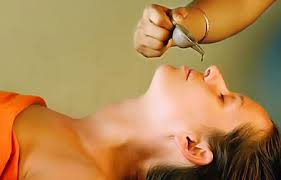
I sometimes imagine a medical drama where someone having a stroke or lying unconscious is revived not with defibrillators but with nasya (medicated nasal therapy) or basti (therapeutic enema). In the hospital where I do night duty, that’s not always fiction. For us, Panchakarma is our hokum ka ekka, our trump card. It often works faster than medicines alone: jalaukavacharan (leech therapy) for an abscess, a pradhaman nasya (nasal therapy) and anjana for an unconscious paietnt, or a simple nasya to clear stubborn sinus congestion.
So, what is Panchakarma?
These days the word is used for anything, from fancy spa massages to overpriced shirodhara (oil poured on the forehead). People assume detox and panchakrama are same, which is not the case. Detox helps in only removing toxins superficially, while Panchakarma helps in penetrating deeper .
It literally means “five actions” and refers to classical Ayurvedic therapies that remove vitiated doshas ( bio-elements: vata, pitta, kapha ) from deep body channels (srotas). Ayurveda sees disease as the buildup of these doshas, which is toxic residue and Panchakarma aims to dislodge and expel it.
It’s more intense than a simple detox and is tailored to the disease.
Example: someone with kidney stones needs a different basti formulation than someone preparing to conceive. Or even two people having the same disease with different constitutions can have different treatments. The goal is shodhana, i.e true elimination of aggravated doshas.
Just like surgery, Panchakarma has a pre- and post-procedure protocol: strict diet, daily regimen, and monitoring. And it’s not all shodhan ( removing doshas ) some therapies are brimhana (nourishing), especially for Vata-dominant or tissue-depleted (dhatu-kshaya) conditions.
How it works
The main shodhana karmas, which are – vaman (therapeutic emesis for excess kapha), virechana (purgation for pitta), basti (various enemas for vata of oil or also decoction based), nasya (nasal administration for head/neck issues), and raktamokshana (bloodletting for certain skin and blood disorders), they all require snehana (oil therapy) and swedana (steam/sudation) first.
These “warm-up acts” coax the doshas from deep tissues toward the gut so they can be expelled.
Sometimes snehapana, which is drinking large amounts of medicated ghee is done beforehand to lubricate and mobilize toxins, especially before vaman and virechan.
So after that when the stage is set, only then does the main act of vaman, virechana, basti, nasya, or raktamokshana, take center stage.
Who can do it?
1. Only those advised by an Ayurvedic physician. Like surgery, there are clear indications and contraindications. Look for a center run by a qualified BAMS (Bachelor of Ayurvedic Medicine & Surgery) practitioner or a state-recognized Ayurvedic doctor.
2. Couples planning conception often undergo Panchakarma to balance doshas and support healthy progeny.
3. Seasonal cleanses: in India, basti in rainy season (varsha), vaman in spring (vasant) and virechana in autumn (sharad) are traditional if there is an imbalance of vata, kapha or pitta dosha respectively.
How long does it take ?
Depending on the therapy and condition, treatment may last 7–21 days, with a follow-up regimen for about a month.
Contrary to “weekend packages,” you can’t safely do vaman one day, basti the next, and virechana the day after. Also there has to be a gap of 7-15 days between each of these panchakarmas.
What to expect?
It’s more like going on a trek, than holidaying in a retreat or spa. Light food, warm water, avoiding cold, heavy exertion, or mental stress are musts.
During shodhana you may feel nausea, headache, or stomach unease as the body expels doshas through vomiting or stools. Drinking ghee beforehand is rarely pleasant but crucial.
Post-treatment, foods are reintroduced gradually, starting with light gruels or khichdi before moving back to a regular diet.
Caution
Panchakarma can cause vyapad (complications) if the patient, season, medicine, or technique is wrong.
One course isn’t a lifetime guarantee of remaining healthy, everything depends on how much you stick to lifestyle and diet changes afterwards as well. Also, chronic issues like skin disorders may need repeated therapy. Scientific research on Panchakarma is growing but still limited, so results can vary and it’s best done under professional supervision.
Final note
The results Panchakarma delivers can surpass medicines alone and often work faster, but only when done properly, with the same care and respect as any surgical procedure.
Panchakarma is’nt recommended for everyone, and sometimes might seem strange to you as well, as one is’nt familiar with these procedure. But when advised by a physician , it can definitely help in your journey towards healing.
Author : Dr Sakina Kapadia (BAMS, MD student )
Very well expressed! Panchakarma is a very pure ,therapeutic procedure which heals our body mind and soul…not just a spa! People MUST understand this.Otherwise the side effects of spa etc become the side effects of ayurved and panchakarma!
So be aware of what u r following and seek for well practiced Vaidya for Ayurvedic therapy.